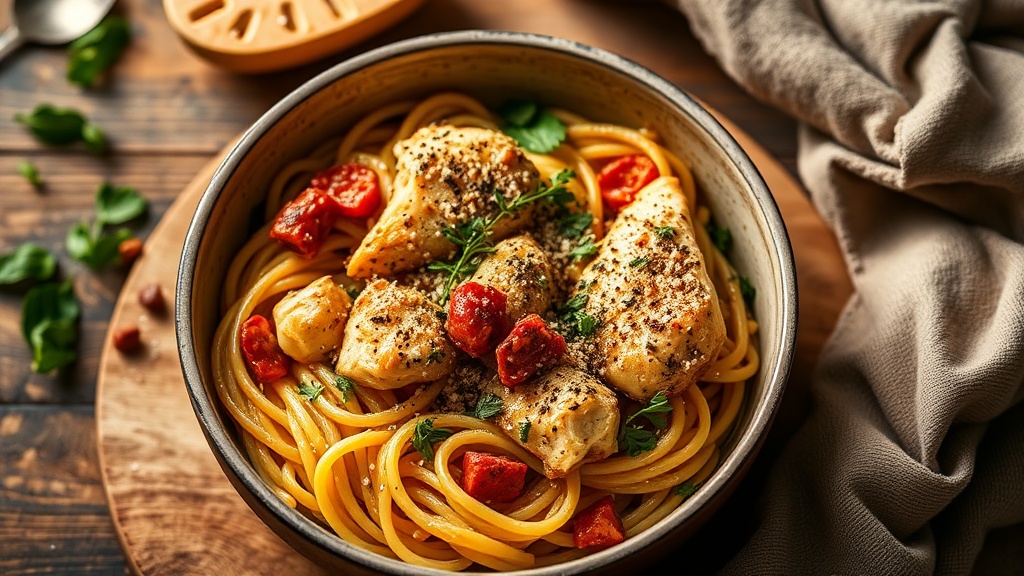
Creamy Tuscan Chicken Pasta: A One-Pot Wonder for Busy Weeknights

What Makes Creamy Tuscan Chicken Pasta So Popular?
This recipe transforms simple pantry staples into a restaurant-quality dinner in under 40 minutes — all in a single pot. The combination of tender chicken, sun-dried tomatoes, fresh spinach, and a garlicky Parmesan cream sauce coats every strand of pasta. No separate sauce pan. No colander cluttering the sink. Just one Dutch oven and a dinner that'll have everyone reaching for seconds.
The magic here isn't complicated technique — it's timing and layering flavors. (The kind of dish that makes you look like a more skilled cook than you actually are.) Here's the thing: one-pot pasta recipes have exploded across food blogs and TikTok feeds for good reason. Busy families need dinners that don't sacrifice flavor for convenience. This Tuscan-inspired dish delivers both.
What Ingredients Do You Need for Creamy Tuscan Chicken Pasta?
You'll need chicken thighs or breasts, pasta (penne or rigatoni work beautifully), heavy cream, chicken broth, sun-dried tomatoes, fresh spinach, garlic, Parmesan cheese, and a handful of pantry seasonings.
The quality of your ingredients matters more than you'd think. Let's break down the components that'll make or break this dish:
The Chicken: Thighs vs. Breast
Boneless, skinless chicken thighs are the unsung hero here. They stay juicy even if you cook them a minute too long — which happens when you're managing homework help and a bubbling pot simultaneously. That said, chicken breast works fine if that's what you've got. Just don't overcook it. (Nobody likes rubbery chicken in their creamy pasta.)
If you're shopping at IGA or Maxi here in Montreal, look for the Quebec-raised options in the fresh meat case. The flavor difference is noticeable — and you're supporting local producers.
The Pasta: Which Shape Works Best?
Short, tubular pasta with ridges holds onto that creamy sauce better than spaghetti ever could. Here's a quick comparison:
| Pasta Type | Sauce Retention | Cook Time in One-Pot Method | Best For |
|---|---|---|---|
| Penne rigate | Excellent — sauce fills the tubes | 11-12 minutes | Families with picky eaters |
| Rigatoni | Superior — large tubes catch everything | 12-14 minutes | Impressing dinner guests |
| Farfalle (bow-tie) | Good — folds hold sauce | 10-11 minutes | Kids who need "fun" shapes |
| Orecchiette | Great — little "ears" cup the sauce | 11-13 minutes | Authentic Italian feel |
Worth noting: De Cecco and Barilla both make excellent dried pasta that holds its shape during the one-pot cooking method. Avoid ultracheap store brands — they turn mushy when cooked directly in sauce.
The Cream Sauce: Building Flavor Layer by Layer
Heavy cream forms the base — don't substitute milk or half-and-half unless you enjoy broken, watery sauces. The fat content matters. Parmesan cheese (the real stuff from the cheese counter, not the green can) adds saltiness and umami. Sun-dried tomatoes bring acidity that cuts through the richness. Fresh spinach wilts in at the end for color and a nutritional boost.
The catch? Your sauce will look too thin when the pasta first finishes cooking. That's normal. It thickens as it stands for 5 minutes — a resting period that's non-negotiable.
How Do You Make One-Pot Creamy Tuscan Chicken Pasta Step by Step?
Brown the chicken, sauté aromatics, add pasta and liquid, simmer until tender, then stir in the cream, cheese, and spinach at the very end.
Here's the detailed breakdown:
Step 1: Sear the Chicken
Heat 2 tablespoons of olive oil in a large Dutch oven or heavy-bottomed pot over medium-high heat. Season 1.5 pounds of chicken (cut into bite-sized pieces) generously with salt and pepper. Brown in batches — overcrowding steams instead of sears. You want golden edges. Remove chicken to a plate.
Step 2: Build the Flavor Base
In the same pot, reduce heat to medium. Add 4 minced garlic cloves and cook 30 seconds until fragrant. (Don't let them brown — burnt garlic ruins everything.) Add 1/3 cup chopped sun-dried tomatoes (the oil-packed kind, drained) and cook another minute.
Step 3: Deglaze and Add Pasta
Pour in 4 cups of low-sodium chicken broth and 1 cup of water, scraping up the browned bits from the bottom. Those bits are liquid gold — flavor concentration. Add 12 ounces of pasta. The liquid should just cover the pasta. If it doesn't, add a splash more water.
Step 4: The Simmer
Bring to a boil, then reduce to a steady simmer. Cook 12-14 minutes, stirring occasionally to prevent sticking. The pasta absorbs the broth as it cooks — that's where the one-pot magic happens. Add the browned chicken back in during the last 5 minutes of cooking.
Step 5: Finish with Cream and Greens
When pasta is al dente, remove from heat. Stir in 3/4 cup heavy cream, 1 cup grated Parmesan, and 3 cups fresh baby spinach. The residual heat wilts the spinach perfectly. Let stand 5 minutes. Sauce thickens. Flavors meld. Patience pays off here.
What Are the Most Common Mistakes When Making This Dish?
Overcooking the pasta, using pre-shredded cheese, and skipping the resting period turn this potential showstopper into a disappointing mush.
Let's address each:
Mistake #1: Cooking pasta too long. One-pot pasta continues absorbing liquid as it rests. Take it off the heat when there's still a tiny bite in the center — it'll finish cooking in the residual heat.
Mistake #2: Bagged, pre-shredded Parmesan. That stuff is coated in cellulose to prevent clumping. It doesn't melt smoothly. Buy a wedge of Parmigiano-Reggiano or Grana Padano and grate it yourself. (A Microplane zester makes this effortless — worth the $15 investment at Williams Sonoma or Canadian Tire.)
Mistake #3: Adding spinach too early. Toss it in at the end or you'll have olive-green sludge instead of vibrant, wilted leaves. The difference is visual — and textural.
Mistake #4: Not seasoning enough. Pasta cooked in broth needs aggressive seasoning. Taste before serving. Parmesan adds salt, but you'll likely need more. Fresh cracked black pepper isn't optional — it's transformative.
Can You Prep Creamy Tuscan Chicken Pasta Ahead of Time?
Yes — with modifications. The fully assembled dish doesn't reheat beautifully (cream sauces separate), but components can be prepped in advance to make weeknight assembly lightning-fast.
Prep strategies that actually work:
- Chicken: Cut and season up to 24 hours ahead. Store covered in the refrigerator.
- Aromatics: Mince garlic and chop sun-dried tomatoes the morning of. Store together in a small container.
- Cheese: Grate Parmesan up to 3 days ahead. Store in an airtight container in the fridge.
- The "not great" option: Fully cooking and refrigerating this dish results in pasta that absorbs all the sauce overnight. It'll taste good but look dry. If you must reheat leftovers, add a splash of cream or broth while warming gently.
What Should You Serve With Tuscan Chicken Pasta?
Simple accompaniments work best — this is a rich dish that doesn't need competition. A crisp green salad with lemon vinaigrette cuts through the creaminess. Garlic bread (store-bought ACE Bakery baguette with butter and garlic, toasted under the broiler) is non-negotiable for sauce-sopping purposes.
Wine pairing? A chilled Pinot Grigio or Vermentino stands up to the acidity of the sun-dried tomatoes while complementing the cream. For beer drinkers, a crisp Italian lager like Peroni balances the richness without overwhelming the palate.
Variations Worth Trying
Once you've mastered the base recipe, experimentation keeps it interesting:
Spicy Tuscan: Add 1/2 teaspoon red pepper flakes with the garlic. The heat plays beautifully against the sweet sun-dried tomatoes.
Mushroom Addition: Sauté 8 ounces of sliced cremini mushrooms after removing the chicken, before adding garlic. They add earthiness and bulk up the dish for larger appetites.
Protein Swap: Italian sausage (casings removed, crumbled) replaces chicken for a more indulgent version. The rendered fat adds even more flavor — reduce the olive oil accordingly.
Dairy-Free Adaptation: Full-fat coconut cream replaces heavy cream surprisingly well. The subtle sweetness works with the tomato. Use nutritional yeast instead of Parmesan, or skip the cheese entirely and finish with extra salt and lemon zest.
Why Does This Recipe Work for Montreal Kitchens?
Our winters are brutal. Our schedules are packed. Our grocery stores carry excellent Italian ingredients thanks to this city's deep Italian-Canadian heritage. (The Little Italy neighborhood on Boulevard Saint-Laurent has been a food destination since the 1950s.)
This dish comes together with ingredients available at any Provigo, Metro, or Jean Coutu with a food section. No specialty shops required — though Milano on Saint-Laurent carries exceptional sun-dried tomatoes if you want to level up.
One-pot cooking means less time at the sink. In a city where many rent apartments with postage-stamp kitchens and single-basin sinks, that's not convenience — it's survival. The recipe scales up for dinner parties (double it in a large Le Creuset or Staub Dutch oven) or down for solo dining with leftovers for tomorrow's lunch.
There's something deeply satisfying about serving a dish that tastes like it required far more effort than it actually did. Your guests don't need to know you only dirtied one pot. That's between you and the dishwasher — or lack thereof.