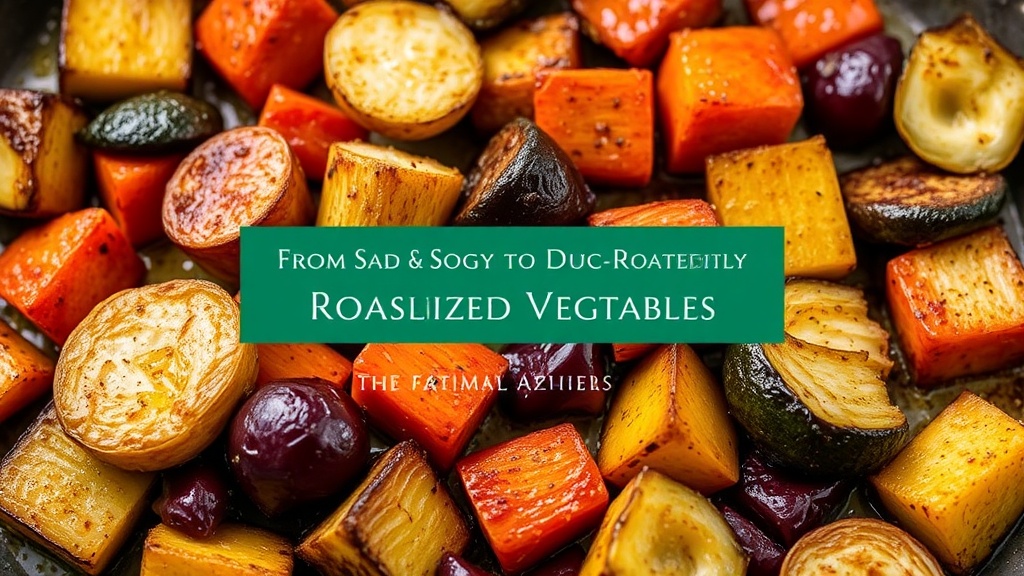
From Sad & Soggy to Perfectly Caramelized: Your Guide to Roasting Vegetables

Picture this: a tray of vibrant, fresh-cut vegetables, tossed with oil and seasonings, destined for a golden, tender-crisp transformation in the oven. But too often, the reality falls short. Instead of beautifully browned edges and a sweet, concentrated flavor, you pull out a pan of limp, watery, or unevenly cooked vegetables. This common kitchen frustration stems from a few key missteps, and understanding them is your first step towards roasting mastery. This guide will walk you through the precise techniques, scientific principles, and practical tips needed to consistently achieve perfectly caramelized, crisp-tender roasted vegetables, turning a once-unpredictable side dish into a reliable star.
Why do my roasted vegetables come out soggy or burnt?
The primary culprits behind disappointing roasted vegetables are moisture and overcrowding. Vegetables, especially those with high water content like zucchini, mushrooms, or bell peppers, release a significant amount of steam when heated. If this steam can't escape, it gets trapped around the vegetables, essentially steaming them rather than roasting them. The result? A flabby, unappetizing texture instead of that coveted crispy exterior. Overcrowding a baking sheet exacerbates this issue. When too many vegetables are packed onto one pan, they insulate each other, preventing proper air circulation and moisture evaporation. This leads to a steamy environment that hinders browning and promotes sogginess.
Another common pitfall is insufficient heat. Roasting requires high temperatures—typically between 400°F (200°C) and 450°F (230°C)—to encourage the Maillard reaction, the chemical process responsible for that delicious browning and complex flavor development. If your oven isn't hot enough, or if the pan itself isn't preheated, the vegetables spend too much time warming up rather than actively browning, giving them more opportunity to release moisture and become limp. Conversely, an oven that's too hot, or vegetables cut inconsistently, can lead to burning on the outside before the inside is tender. It’s a delicate balance that depends on a few critical factors.
How do fat, seasoning, and cutting technique impact roasted vegetable perfection?
The right fat does more than just prevent sticking; it’s a flavor carrier and a heat transfer agent. High-smoke-point oils like avocado oil, grapeseed oil, or refined coconut oil are excellent choices because they can withstand the high temperatures required for roasting without breaking down and producing off-flavors. Olive oil works well too, particularly if you keep your oven temperature on the lower end of the roasting spectrum (around 400°F), but its smoke point is lower than other options. The goal is to lightly coat the vegetables—just enough to help with browning and flavor, but not so much that they become greasy. A good rule of thumb is about 1-2 tablespoons of oil per pound of vegetables.
Seasoning, while seemingly straightforward, plays a crucial role. Salt is paramount. It not only enhances flavor but also helps to draw out some surface moisture from the vegetables, aiding in crispness. Don't be shy with it! Beyond salt, freshly ground black pepper, garlic powder, onion powder, paprika, or dried herbs like oregano and thyme all contribute layers of flavor. For deeper aromatic notes, fresh herbs like rosemary or thyme sprigs can be added towards the end of roasting to prevent them from burning. Remember to toss everything thoroughly to ensure an even distribution—every piece should get a little love.
Cutting technique is perhaps one of the most overlooked aspects. Uniformity is key. If you have large chunks of potato mixed with tiny florets of broccoli, you're guaranteed to have some pieces burnt while others are still raw. Aim for similarly sized pieces, or group vegetables by their cooking times. Harder, denser vegetables like potatoes, carrots, or squash need smaller cuts or a head start in the oven. Softer vegetables like bell peppers, zucchini, or cherry tomatoes require larger cuts or should be added later to the roasting process to prevent them from turning to mush.
What's the best way to ensure even cooking and deep flavor in the oven?
Achieving consistently even cooking and that coveted deep caramelization hinges on proper heat management and strategic placement. Always preheat your oven thoroughly—and don't just wait for the light to turn off. Give it an extra 10-15 minutes after it signals it's reached temperature, especially if you're using a baking stone or a heavy-duty sheet pan. This ensures the ambient heat is truly stable and your cooking surface is hot. For an even better start, place your empty baking sheet in the oven while it preheats. This thermal head start helps create instant sizzle when the vegetables hit the pan, kickstarting the Maillard reaction rather than letting the vegetables sit and steam on a cool surface.
When it comes to arrangement, resist the urge to pile. A single layer of vegetables, with space between each piece, is non-negotiable for browning. If you’re roasting a large batch, use two baking sheets rather than crowding one. Overcrowding turns roasting into steaming, leaving you with limp, pale vegetables. The air circulation around each piece allows moisture to evaporate efficiently, leading to crispier textures and deeper flavor development. About halfway through the roasting time, give your vegetables a good stir or flip them. This ensures all sides get exposed to the direct heat of the pan and the radiant heat of the oven, promoting even browning and preventing sticking. This simple act can make a significant difference in the final texture and appearance of your roasted bounty.
Can I roast different vegetables together, and how?
Yes, absolutely! Roasting a medley of vegetables together is a fantastic way to create a colorful, flavorful side dish or a base for a grain bowl. The trick lies in understanding and accounting for different cooking times. Vegetables vary widely in density and water content, meaning some will cook much faster than others. For example, dense root vegetables like potatoes, sweet potatoes, and carrots take longer to become tender and caramelized compared to quicker-cooking options like broccoli, bell peppers, or asparagus.
There are two main strategies for successful mixed-vegetable roasting. The first is to adjust your cutting sizes. For a truly mixed pan, cut the slower-cooking vegetables into smaller pieces than the faster-cooking ones. This way, they should all finish around the same time. For instance, if you’re roasting potatoes and bell peppers, cut the potatoes into 1/2-inch cubes and the bell peppers into 1-inch strips. The second, often more reliable, method is to stagger their addition to the oven. Start with the denser, longer-cooking vegetables, giving them a 10-15 minute head start. Then, add the quicker-cooking vegetables to the same pan or a second pan, tossing everything together for the remaining cook time. This ensures everything reaches its peak tenderness and caramelization without overcooking some elements. Always keep a watchful eye, especially towards the end, as oven temperatures can vary, and doneness is ultimately a matter of personal preference—fork-tender but with a bit of resistance is generally ideal for most roasted vegetables.