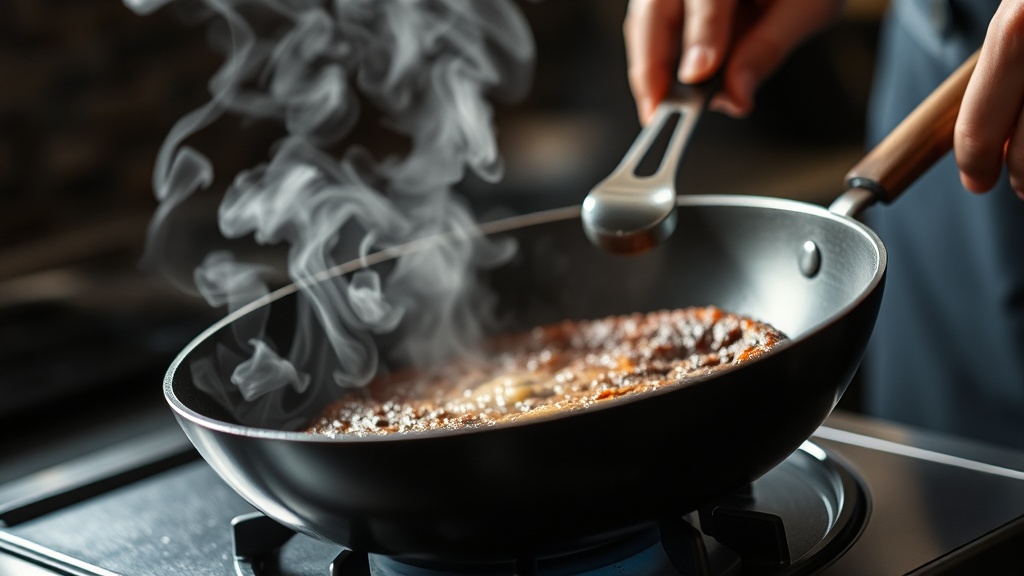
How to Tell If Your Pan Is Hot Enough for Perfect Searing

Quick Tip
Flick a few drops of water into your dry pan—if they dance and evaporate within 2-3 seconds, the pan is ready for oil.
Getting the pan temperature right separates restaurant-quality crusts from sad, gray meat. This guide covers four reliable methods to check pan heat—plus the common mistakes that sabotage even experienced home cooks.
What happens if the pan isn't hot enough?
The meat sticks, steams instead of sears, and turns that unappetizing boiled-gray color. Here's the thing: when protein hits a lukewarm pan, moisture leaches out and simmers between the meat and the metal. No Maillard reaction—just disappointment.
Cold-start cooking has its place (bacon renders beautifully that way). But for steaks, chops, and scallops? The pan needs to be ripping hot.
How can you tell when a pan is ready for searing?
The water droplet test is the fastest, most reliable method. Flick a few drops of water onto the dry, preheated surface.
What to look for:
- Too cold: Water pools and bubbles gently
- Just right: Droplets skitter and dance across the surface (the Leidenfrost effect)
- Too hot: Water vanishes instantly with aggressive sizzling
Worth noting—this works on stainless steel and cast iron. Non-stick pans? They shouldn't be preheated empty (damages the coating), so skip this test.
What's the best oil for high-heat searing?
Refined avocado oil, with its 520°F smoke point, handles searing without breaking down. The catch? Quality matters. Here's a quick comparison:
| Oil | Smoke Point | Best For |
|---|---|---|
| Refined Avocado Oil | 520°F | Steaks, chops, high-heat searing |
| Ghee (Clarified Butter) | 485°F | Flavor-forward dishes |
| Refined Peanut Oil | 450°F | Stir-fries, budget cooking |
| Extra Virgin Olive Oil | 375°F | Finish dishes—never sear |
Oil behavior tells you plenty too. When Cooks Illustrated recommends shimmering oil as your visual cue—they're onto something. The oil should ripple and move like water, not sit thick and still.
How long should you preheat a cast iron skillet?
Five to seven minutes over medium-high heat. Cast iron holds temperature beautifully but heats slowly—rushing this step guarantees sticking.
The Lodge Cast Iron method recommends starting with a dry pan, then adding oil once it's hot. Stainless steel? Similar timing, though All-Clad D3 pans heat faster due to that aluminum core.
One last thing—don't trust your stovetop dial. Gas burners vary wildly. Electric coils cycle on and off. Induction is more consistent but still needs that water test confirmation. The pan's surface temperature matters infinitely more than the number printed on your knob.