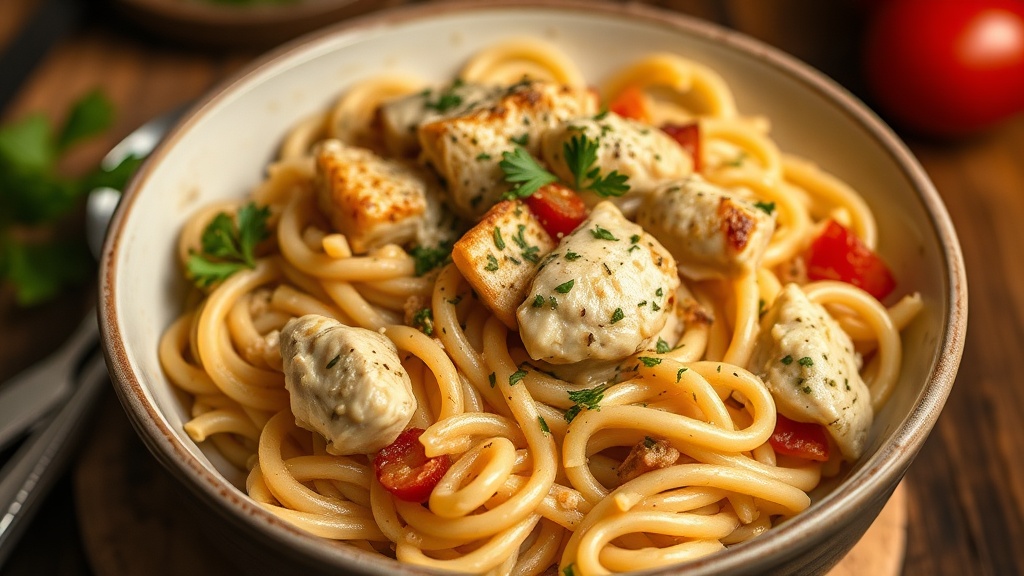
One-Pot Creamy Tuscan Chicken Pasta: Weeknight Dinner Magic

This post delivers a complete recipe for creamy Tuscan chicken pasta cooked entirely in one pot — no separate saucepans, no draining colanders, no mountains of dishes. You'll learn the specific ingredients that create authentic Tuscan flavor, step-by-step technique for perfectly cooked pasta that absorbs seasoning instead of boiling it away, and practical variations that work with what you already have in the kitchen. The result is a restaurant-quality dinner that comes together in 35 minutes with minimal cleanup — exactly what busy weeknights demand.
What makes Tuscan chicken pasta the perfect weeknight dinner?
The dish hits a rare sweet spot: impressive enough for guests, simple enough for Tuesday. Creamy Tuscan chicken pasta combines protein, starch, and vegetables in a single cohesive dish — sun-dried tomatoes bring acidity and depth, spinach wilts into the sauce for color and nutrition, and the chicken stays tender because it simmers gently rather than searing hard and drying out.
Here's the thing — traditional Italian pasta dishes rarely combine protein and sauce this way. Tuscans themselves might raise an eyebrow (they're notorious purists about pasta preparation). But this particular preparation — often called "marry me chicken pasta" in viral recipe circles — works because the pasta absorbs flavor directly from the cooking liquid instead of just getting sauced at the end.
The one-pot method isn't just about laziness (though that's valid). When pasta cooks in seasoned broth and cream rather than plain water, the starch released during cooking naturally thickens the sauce. You get coating, clingy consistency without flour roux or cornstarch slurries. The catch? Timing matters. Different pasta shapes absorb liquid at different rates — more on that later.
What ingredients deliver that authentic Tuscan flavor?
Sun-dried tomatoes packed in oil form the foundation — not the dry ones that need rehydrating. The oil they're packed in carries concentrated tomato flavor plus herbs (usually oregano and basil). You'll use both the tomatoes and some of that oil to build the base.
Quality chicken thighs work better than breasts here. They stay juicy through the extended simmering time, and their slightly higher fat content enriches the sauce. That said, if you've only got breasts in the freezer, they'll work — just don't overcook them. Cut into uniform bite-sized pieces for even cooking.
The cream component sparks debate. Heavy cream (35% fat) gives the richest, most stable sauce that won't break when reheated. Half-and-half works in a pinch but can separate slightly. Some recipes call for cream cheese as an emulsifier — not traditional, but effective for stability.
For the Tuscan signature, you'll need:
- Sun-dried tomatoes in oil — Bella Sun Luci or similar quality brands, not the desiccated bagged versions
- Fresh baby spinach — wilts faster than mature spinach, less prep
- Garlic — at least four cloves, minced fine
- Italian seasoning — or individual dried basil, oregano, and thyme
- Parmesan cheese — genuine Parmigiano-Reggiano if possible, grated fresh; the pre-grated stuff in green cans contains anti-caking agents that affect melting
- Chicken broth — low-sodium gives you control; regular can oversalt the final dish
Worth noting: the "Tuscan" label gets applied loosely in North American recipe development. Real Tuscan cuisine emphasizes beans, bread, and olive oil more than cream sauces. This dish draws inspiration from the region's sun-dried tomato and herb traditions rather than strict authenticity — think of it as Italian-American comfort food with Tuscan accents.
How do you make one-pot creamy Tuscan chicken pasta step by step?
The method relies on building flavor in layers, then letting the pasta do the work of thickening the sauce. You'll need a large, deep skillet or Dutch oven — something with a tight-fitting lid. A Lodge enameled Dutch oven (6-quart) works perfectly and transitions from stovetop to table for serving.
Step 1: Brown the chicken
Heat two tablespoons of the sun-dried tomato oil in your pot over medium-high heat. Season chicken pieces with salt and pepper, then brown in batches — overcrowding steams instead of sears. You're not cooking through here, just building color. Remove chicken and set aside.
Step 2: Build the aromatic base
In the same pot (those browned bits are flavor gold), add more oil if needed. Sauté diced onion until soft — about four minutes. Add minced garlic and cook just until fragrant, 30 seconds. One clove too long and it turns bitter.
Step 3: Add liquids and pasta
Pour in chicken broth and heavy cream. Scrape the bottom vigorously to dissolve those browned bits (called fond, if we're being technical). Add Italian seasoning, red pepper flakes if you want heat, and the uncooked pasta. Stir well to prevent sticking.
Step 4: Simmer covered
Bring to a boil, then reduce to a steady simmer. Cover and cook for the pasta package time minus two minutes. The pasta should be quite al dente — it'll continue cooking in the next step.
Step 5: Finish with vegetables and cheese
Return chicken to the pot along with chopped sun-dried tomatoes. Stir in handfuls of fresh spinach — it'll look like too much but wilts dramatically. Cover again for two minutes until spinach collapses and chicken cooks through.
Remove from heat. Stir in grated Parmesan gradually — adding it all at once can cause clumping. The sauce should coat the back of a spoon. If too thick, splash in more broth. If too thin, let stand uncovered for five minutes; it'll tighten up as it cools slightly.
Taste and adjust salt. The Parmesan adds saltiness, so go easy until the end. Finish with fresh cracked black pepper and more Parmesan at the table.
Which pasta shape works best for one-pot Tuscan chicken?
Short pasta with ridges or tubes performs better than long strands in this application. The pasta needs to submerge in the limited liquid, and shapes with surface texture grip the creamy sauce better than smooth varieties.
| Pasta Shape | Cooking Time Adjustment | Texture Result | Best For |
|---|---|---|---|
| Penne rigate | Package time minus 2 minutes | Firm tubes hold sauce in ridges | Classic presentation, easy eating |
| Rigatoni | Package time minus 3 minutes | Large tubes, substantial bite | Hearty appetites, fork-only dining |
| Rotini | Package time minus 2 minutes | Spirals trap sauce effectively | Maximum sauce per bite |
| Farfalline (small bowties) | Package time minus 1 minute | Delicate, cooks quickly | Faster weeknight meals |
| Orecchiette | Package time minus 2 minutes | Little "ears" cup the sauce | Authentic Italian feel |
Barilla and De Cecco both make reliable dried pasta that holds its shape through one-pot cooking. Avoid "no-boil" or oven-ready varieties — they're formulated for lasagna baking and turn mushy in skillet preparations.
That said — gluten-free pasta works here too. Bionaturæ rice and potato blend maintains texture better than pure rice pasta, which can get gummy. The key is reducing cooking time further and serving immediately; gluten-free pasta continues softening as it sits.
What variations work when you're missing ingredients?
Adaptability separates good weeknight recipes from precious weekend projects. Here's how to handle common substitutions without derailing dinner:
No heavy cream? Use evaporated milk (the canned stuff) — it's stable when heated and has richness without the fat content. Don't use regular milk; it curdles at simmering temperatures.
No fresh spinach? Frozen works — thaw and squeeze dry first, or add directly (increase cooking time by two minutes). Kale or Swiss chard substitute well but need longer wilting — add them with the pasta instead of at the end.
Vegetarian adaptation: Skip chicken, use vegetable broth, and add a can of drained white beans (cannellini or great northern) when you'd return the chicken to the pot. The beans get creamy and substantial in the sauce.
Adding vegetables: Mushrooms sauté beautifully with the onions. Zucchini or bell peppers add bulk — dice small and add with the pasta so they cook through. Artichoke hearts (canned, drained) fit the Mediterranean profile perfectly; stir in with the sun-dried tomatoes.
Protein swaps: Italian sausage (casing removed, crumbled) replaces chicken for a spicier version. Shrimp work — add them raw in the last three minutes of cooking. They'll turn pink and curl when done; overcooked shrimp turn rubbery fast.
How do you store and reheat leftovers properly?
Cream-based pasta dishes don't improve with age the way tomato sauces do — the pasta continues absorbing liquid and can turn mushy. That said, leftovers keep refrigerated for three days maximum.
Store in airtight containers. When reheating, add a splash of chicken broth or milk to loosen the sauce — it'll have thickened considerably in the refrigerator. Microwave in 30-second intervals, stirring between, or reheat gently on the stovetop. High heat breaks cream sauces, causing that unappetizing oil separation.
Freezing isn't recommended. Dairy-based sauces tend to separate and grain when thawed, and pasta texture suffers. If you must freeze, undercook the pasta significantly (package time minus 5 minutes) and add extra liquid before freezing — then finish cooking when reheating. Even then, expect compromised texture.
The smarter prep strategy? Chop vegetables and chicken ahead of time. Measure seasonings into a small bowl. When dinner hour hits, you're essentially assembling — the active cooking time becomes pure automation.
What sides complement Tuscan chicken pasta without overloading the plate?
The dish is already protein-rich, starch-heavy, and vegetable-inclusive. You don't need elaborate accompaniments.
A simple arugula salad with lemon vinaigrette cuts through the richness — the peppery greens and acidic dressing balance the creamy pasta. Crusty bread for sauce-mopping feels essential to some, redundant to others. Decide based on your crowd's appetite.
Roasted vegetables (asparagus, broccolini, or Brussels sprouts) work if you want more greens — roast them on a sheet pan while the pasta simmers, since your oven's free. The charred, caramelized flavor contrasts the creamy pasta.
For wine pairing, a medium-bodied Italian red like Chianti Classico stands up to the tomato and cream without overwhelming. San Pellegrino with lemon works for non-drinkers — the carbonation and acidity perform similar palate-cleansing duty.
Dessert should be light. Fresh berries with a dollop of mascarpone. Or skip it — this is a satisfying, complete meal that doesn't need a sweet follow-up to feel finished.
That satisfying moment when the spoon scrapes the bottom of an empty pot — that's weeknight dinner done right. No colander waiting in the sink. No sauce-splattered stovetop. Just a single Dutch oven soaking while you pour that well-earned glass of wine.